

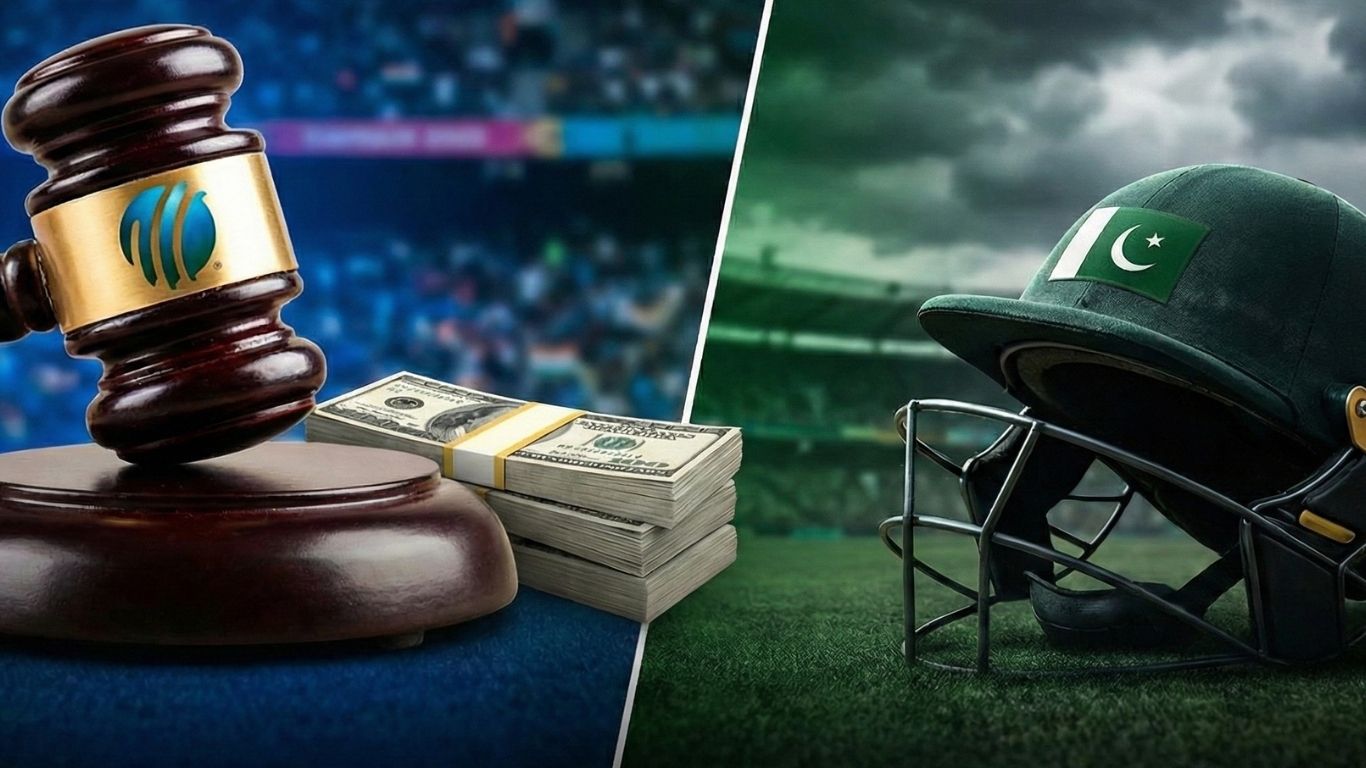
The BCCI-PCB standoff is more than a scheduling conflict; it reveals a clear power imbalance within the ICC. The 2025 Champions Trophy ended in a shaky compromise, but new issues over the 2026 T20 World Cup expose any pretence of fairness.
Pakistan refused to play India in Colombo, citing the same government orders that India had referenced when skipping Lahore. However, this time, the reaction from stakeholders was notably different. The situation gives the impression that the ICC may be prioritising commercial considerations over consistent application of rules.
The ICC’s Power Play: One Rule for India, Another for Pakistan
1. The Hybrid Rule Only Works One Way
The Champions Trophy 2025 highlighted a pattern. The ICC addressed security concerns when the BCCI raised them. India declined to travel to Pakistan, and the ICC established a Hybrid Model that moved India’s games to Dubai without additional cost.
Now, the PCB is seeking a similar response for the 2026 T20 World Cup for Bangladesh, referencing comparable government orders. Instead, the conversation has shifted to possible penalties. The leadership’s approach appears different from India’s, which may give the impression that financial influence is at play.
2. The Written Proof Double Standard
During the Champions Trophy, the BCCI did not provide a formal government letter explaining its decision not to travel. Even so, the ICC accepted their explanation.
In the present case, the governing body is requesting formal documentation from the PCB regarding the government’s stance. This difference in approach may be viewed as inconsistent, suggesting that the ICC responds differently to similar situations.
3. Cash Threats vs. Staying Quiet
When India’s 2025 schedule change occurred, the primary focus was on travel logistics rather than potential fines.
Now, reports indicate that the ICC has raised the possibility of significant budget reductions or potential bans for the PCB in light of the 2026 situation. This divergent response may reflect differences in the boards’ respective roles and contributions.
4. The Change in Leadership
When Jay Shah assumed the ICC Chair in late 2024, a notable shift in leadership approach occurred. The focus appears to have moved from emphasising host authority to prioritising commercial considerations. In this context, ensuring India’s participation seems to have become a primary goal.
ALSO READ: 3 Reasons Why Pakistan Not Showing Up Is Actually A Huge Gift For Team India
Leadership is now strongly focused on maintaining the television value of Indian matches. This has led to other boards playing less central roles, and some may feel the need to adapt to the BCCI’s commercial priorities.
