

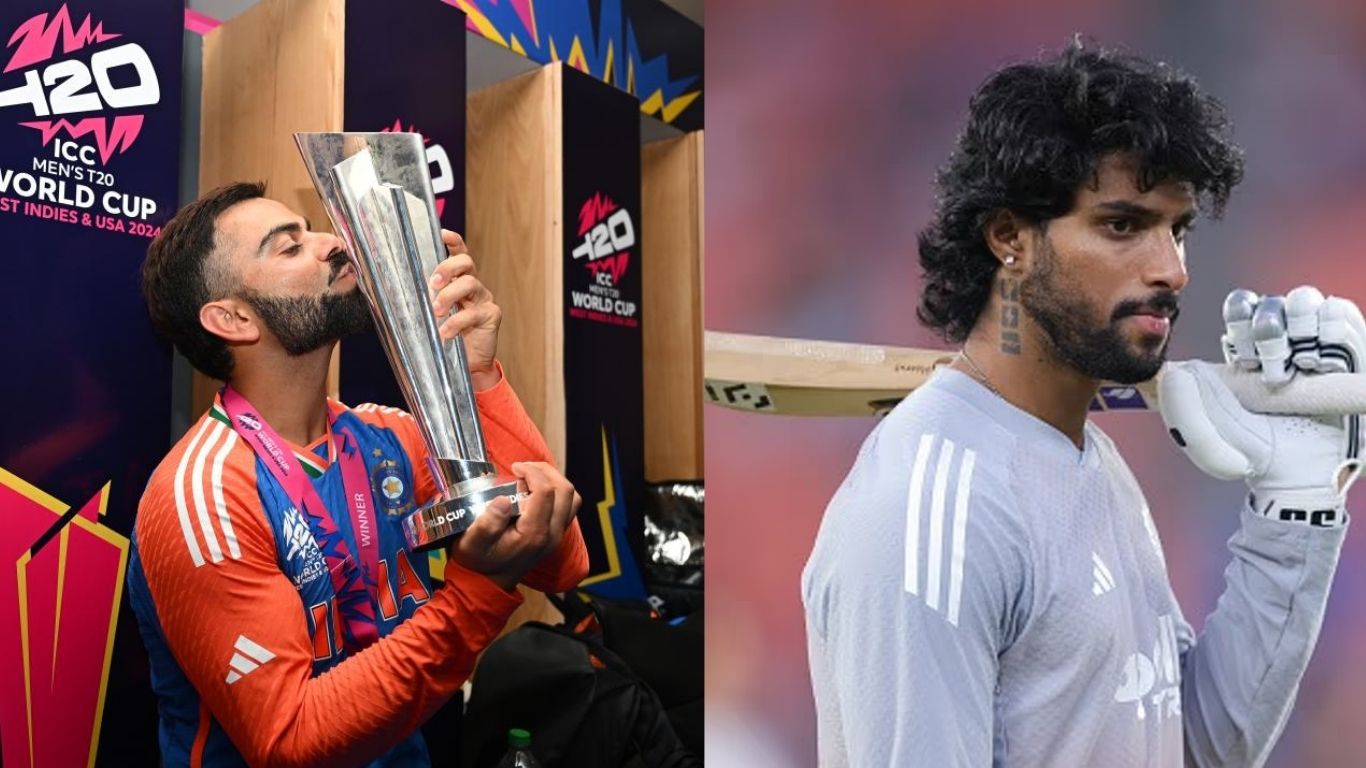
It is February 2026. The Men in Blue are right on the edge of a title defence on home soil. The T20 World Cup starts in just a few days. Tilak Varma is back from surgery, and his return has given the squad a huge boost.
It is tempting to use his 140+ strike rate in a finisher role. But putting the Hyderabad left-hander at No. 3 is actually the winning move for India. Here is why the one-down spot fits Tilak Varma much better than just swinging hard at the end of the game.
5 Reasons Tilak Varma at No. 3 is Better for India Than a Floating ‘Finisher’ Role
1. Handling Spin on Slow Tracks
India and Sri Lanka are hosting this tournament together. This means tracks in Chennai, Colombo, and Ahmedabad will turn and shape the games. Tilak Varma has a much better technique against spin than most power hitters.
By batting at No. 3, he can shut down the opponent’s spin attack in the middle overs. He uses his feet and wrists to find gaps in the field, ensuring he doesn’t have to bet everything on risky big shots. A finisher coming in during the 16th over usually faces fast bowling. Tilak Varma is too good against spin to waste him by waiting until the spinners are finished.
2. The Anchor Who Can Also Attack
Virat Kohli’s exit left a big gap. India needs someone who can stop a collapse early on but still score quickly. Tilak Varma has shown he can do exactly that with those back-to-back hundreds against South Africa in late 2025. He doesn’t just swing blindly. He builds an innings. This means he can steady the ship if the openers get out for cheap. A “floater” coming in at No. 6 doesn’t have the luxury of time to do that.
ALSO READ: Suryakumar Yadav Captaincy Record: Why India Is Unstoppable Ahead Of ICC T20 World Cup 2026?
3. Making Space for the Power Hitters
India’s lower order is packed with raw power. You have Hardik Pandya, Rinku Singh, and Shivam Dube ready to go. Dropping Varma down the order just clogs things up. It might leave these big hitters with too few balls to face. Tilak Varma should set the pace at No. 3 instead. This lets Pandya and Dube stay in their best roles. They can focus on destroying the death bowling instead of trying to rebuild a broken innings.
4. Keeping the Left-Hander Advantage
Bowlers hate it when they can’t settle on a line. A Left-Right batting pair forces them to keep changing their plans. Right-handers like Suryakumar Yadav will probably follow him in the lineup. If Tilak Varma stays at No. 3, he ensures the bowlers stay under pressure even if a left-handed opener like Abhishek Sharma gets out. This clever shift keeps captains from getting comfortable with their field settings.
5. Cool Head in a Run Chase
Chasing scores in a high-pressure World Cup takes serious nerves. Tilak Varma has shown plenty of times, especially in that Asia Cup final, that he handles the heat well. A finisher often has no time to think; they just have to hit.
ALSO READ: The 3 Overs That Proved Team India Still Has A ‘Death Bowling’ Phobia
A No. 3 actually has time to plan. His 45 off 19 balls in the recent warm-up showed he can shift into top gear. But his biggest strength is judging exactly when to take a risk to get the team over the line.
