

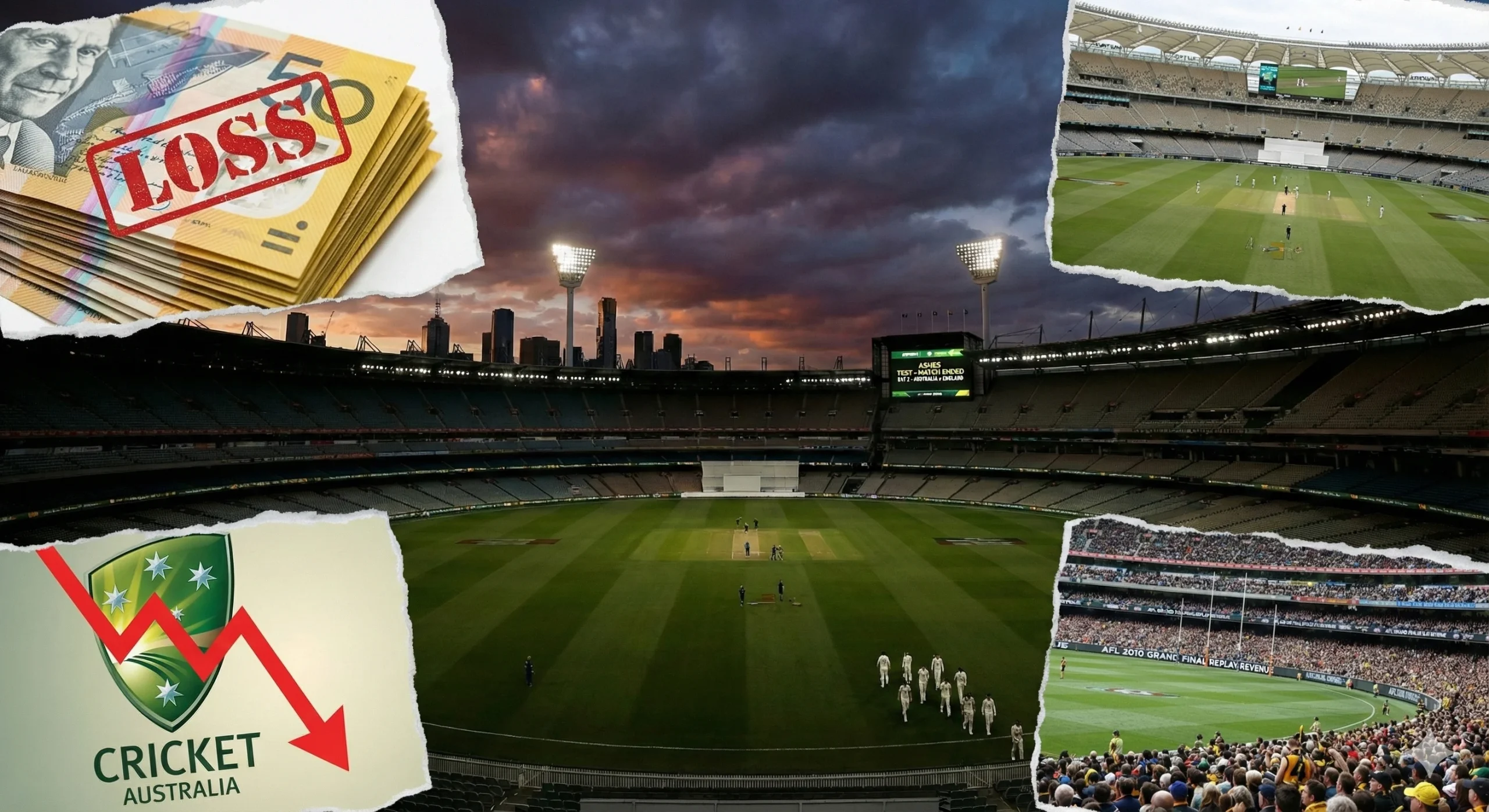
Recent reports have highlighted a significant financial setback for Cricket Australia. These reports indicate cumulative losses totalling approximately $15 million from recent Test matches in Perth and Melbourne.
This major deficit has sparked discussions about the commercial viability of hosting certain Test series. This is especially true for matchups outside of marquee nations like India or England.
Because of this, industry commentators have drawn a striking comparison between this loss and the revenue the Australian Football League generated from its 2010 Grand Final replay. This comparison emphasises the massive scale of the financial shortfall.
Financial shortfall for Cricket Australia raises concerns over Test Match viability
The extensive Optus Stadium hosted the Test match in Perth, which organisers marketed as “The West Test.” However, the event faced considerable challenges in attracting large crowds. Several factors contributed to the low attendance.
These included the timing of the match before the Christmas holiday and the perceived lack of a high-profile opposition. These factors significantly impacted gate receipts and match-day revenue. Furthermore, the costs of hosting a Test match at a major venue are substantial. Without enough people in the stands, these expenses quickly outpace income.
Similarly, the iconic Boxing Day Test at the Melbourne Cricket Ground did not yield its usual returns. While it is traditionally a financial cornerstone for the cricket summer, this year was different.
Initial crowd numbers were respectable, but the match against England wrapped up on the second day. As a result, this premature finish led to a complete loss of potential revenue. The governing body lost ticket sales, corporate hospitality, and broadcast advertising for a fifth day of play. These combined losses present a complex challenge for Cricket Australia as it plans future international schedules.
Opinion: A Wake-Up call for scheduling and promotion
This reported $15 million loss is a clear warning for Cricket Australia. It demands a rethink of the future structuring of the home Test summer. It suggests that administrators can no longer rely solely on tradition to guarantee financial success. This is particularly evident when hosting nations outside of the “Big Three.”
ALSO READ: Sorry Josh Inglis: The Brutal Truth About Australia’s Keeper Spot Until 2027
This means administrators must urgently reconsider their approach to scheduling. They might avoid pre-Christmas Tests in certain markets or implement more creative promotional strategies to boost attendance. Ultimately, ensuring the sustainability of Test cricket requires a proactive strategy. The sport must adapt to changing audience behaviours and commercial realities rather than simply hoping for the best.
