

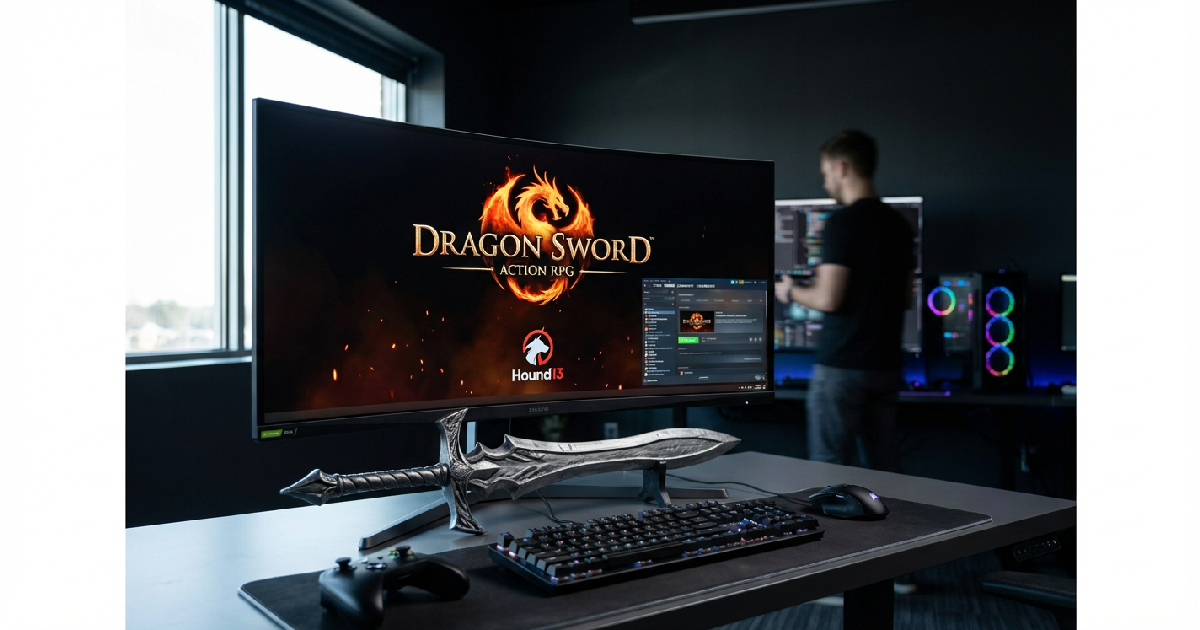
The boundary between traditional PC gaming and the mobile RPG market continues to blur as Hound13, the South Korean developer known for Hundred Soul, readies its next major project for a global stage. The studio has confirmed that “Dragon Sword,” previously referred to by the codename “Project D,” is being developed for a release on Steam with a specific focus on the premium package model.
This shift represents a strategic pivot for Hound13. While many Korean developers have historically leaned into the “games as a service” (GaaS) model, Dragon Sword aims to offer a more contained, narrative-driven experience. The move toward a Steam release indicates an intention to capture the Western market, where the appetite for high-fidelity action RPGs without aggressive monetization remains high.
Action-Forward Design Meets the Unreal Engine 5
Hound13 has built a reputation for its “impactful” action mechanics, a legacy rooted in the experience of its founders who previously worked on the original Dragon Nest. With Dragon Sword, the studio is moving into the Unreal Engine 5 era. Early glimpses of the title showcase a vibrant, semi-open world that leans into a stylized, animated aesthetic rather than grim realism.
The gameplay emphasizes fluid motion and combo-based combat. Unlike the automated systems often found in mobile-first RPGs, Dragon Sword is being built with manual precision in mind. This design choice is critical for the Steam audience, where players typically demand deep mechanical complexity and responsive controls. The “package game” designation is also a significant signal; it suggests that the core loop will prioritize progression through skill and exploration rather than pay-to-win mechanics.
And while the game was initially conceived with cross-platform play in mind, the current development focus emphasizes the PC experience to ensure the graphical fidelity meets the standards of 2026 hardware. The developer has expressed that they want the world of Dragon Sword to feel reactive, with environments that aren’t just backdrops but integral parts of the combat strategy.
Webzen’s Investment and the Global Strategy
The road to Steam has been paved by significant backing. Webzen, a powerhouse in the Korean gaming industry, made a substantial investment of hundreds of billions of won into Hound13 specifically to secure the publishing rights and support the development of Dragon Sword. This partnership highlights the industry’s belief in the project’s potential to break out of the local market.
For Webzen, the deal is a way to diversify its portfolio, moving beyond the legacy of the MU franchise and into the prestige action-RPG space. For Hound13, it provides the runway needed to polish a package-style game, which often requires a higher upfront cost with less immediate daily revenue than mobile titles.
The decision to target Steam isn’t just about reach; it’s about branding. In the current market, a successful Steam launch can act as a seal of quality that carries over to other platforms. If Dragon Sword can land with “Mostly Positive” reviews from the often-critical Steam community, its long-term viability as a franchise is virtually guaranteed.
Setting Expectations for the Release
While a definitive launch date remains under wraps, the transition from “Project D” to “Dragon Sword” and the announcement of Steam readiness suggests the game is entering the final phases of production. There is still much to learn about the specific story beats and how the “package” pricing will be structured, but the intent is clear.
Hound13 is betting that there is a global audience hungry for Korean-style action mechanics minus the mobile baggage. It’s a risky move in a crowded market, but with the pedigree of the team and the power of Unreal Engine 5, Dragon Sword is positioned as one of the more interesting PC prospects coming out of East Asia this year.
Frequently Asked Questions
Will Dragon Sword be a single-player game?
While the game features a strong narrative focus and a “package” model usually associated with single-player titles, early reports suggest there will be cooperative elements. However, the focus remains on a self-contained experience rather than a traditional MMORPG.
How does this relate to the developer’s previous game, Hundred Soul?
Dragon Sword is considered a spiritual successor in terms of combat philosophy. Hound13 is taking the “action-first” DNA of Hundred Soul and scaling it up for a much larger, more immersive world built on newer technology.
Is Dragon Sword still coming to mobile?
Yes, the project is still envisioned as a cross-platform title. However, the recent emphasis has been on the Steam version to ensure the game meets the performance and quality benchmarks expected by PC enthusiasts.
