

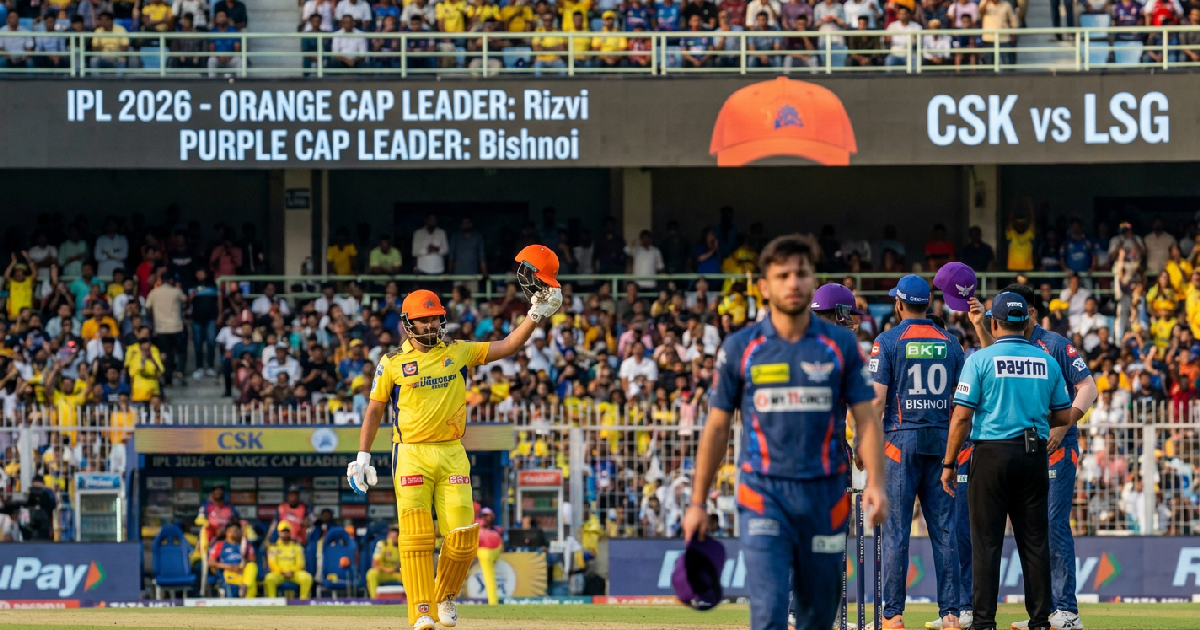
The early stages of the 2026 Indian Premier League have produced an unexpected hierarchy, as young domestic talents have surged past established international superstars to claim the tournament’s most coveted individual honors. With the first block of fixtures completed, the narrative is no longer centered on the veteran heavyweights but on the emergence of Sameer Rizvi and the tactical dominance of Ravi Bishnoi.
For weeks, the build-up to the season was dominated by talk of veteran returns and high-profile captaincy shifts. However, the performance of Rizvi in the middle order and Bishnoi’s mastery of the middle overs has shifted the national conversation toward the depth of India’s white-ball talent pool. It’s a trend that suggests the 2026 edition could be a definitive passing of the torch.
Sameer Rizvi defies expectations in Orange Cap race
Sameer Rizvi was once a name associated with potential and high-price auction bids, but this season he has evolved into a clinical finisher and anchor. Holding the Orange Cap at this stage of the competition is no small feat, particularly given the strike rates required to stay ahead of the chasing pack. Rizvi’s success hasn’t just come from brute force; he’s displayed a mature ability to manipulate the field and target specific bowlers during the death overs.
Analysts had predicted the usual suspects—Virat Kohli, Shubman Gill, or perhaps an overseas powerhouse—to lead the scoring charts. Instead, Rizvi’s consistency across varied surfaces has kept him at the summit. His ability to handle both high-velocity pace and tight spin has made him the most difficult wicket to claim in the tournament so far. If he maintains this trajectory, the national selectors will find it increasingly difficult to ignore him for upcoming international assignments.
Ravi Bishnoi leads the spin resurgence
While batters continue to push the boundaries of scoring, Ravi Bishnoi has proved that a clever leg-spinner remains the most dangerous weapon in a captain’s arsenal. Leading the Purple Cap standings, Bishnoi has been more than just a wicket-taker; he has been a momentum-killer. His quick-arm action and deceptive googlies have consistently flummoxed top-order batters who are often looking to capitalize on the powerplay or accelerate in the middle sections of the innings.
Bishnoi’s rise to the top of the wicket-taking charts underscores a broader tactical shift in IPL 2026. Teams are increasingly relying on bowlers who can provide breakthroughs without sacrificing economy. Bishnoi has managed to do both, often finishing his four-over spells with figures that look more suited to a maiden Test session than a high-octane T20 fixture. His battle with Rizvi and other top batters will likely define the mid-season standings as pitches begin to wear and offer even more assistance to the spinners.
The impact of the new domestic dominance
The fact that two Indian youngsters are leading the individual charts says a lot about the current state of the league. In previous years, overseas imports often dictated the pace of the competition. In 2026, the domestic core of the franchises has taken center stage. This shift is partly due to the evolving scouting networks that are now unearthing “specialists” rather than generalists—players like Rizvi who are groomed specifically for the pressures of the IPL environment.
And while it’s still early in the campaign, the pressure on the chasing pack is mounting. Historically, players who hold the caps through the first third of the season often carry that momentum into the playoffs. For the established stars, the challenge is now about recalibrating their approach to handle the specific threat posed by Bishnoi’s variation or matching the sheer run-scoring appetite of Rizvi.
IPL 2026 Early Season FAQ
Does the Orange Cap winner always come from a playoff-bound team?
Not necessarily, but it’s very common. While a player can score massive runs individually, if their team doesn’t win, they get fewer opportunities to bat in the knockout stages. However, Sameer Rizvi’s current form is helping his franchise stay firmly in the hunt for a top-four spot.
How does Ravi Bishnoi’s style differ from traditional leg-spinners?
Bishnoi is flatter and faster than the traditional “looped” leg-spinner. He relies on a stinging googly and a trajectory that makes it very hard for batters to get under the ball. This “into the pitch” style is exactly why he’s currently leading the Purple Cap race—it leaves very little room for error for the batter.
Can these standings change quickly this early in the season?
Absolutely. One big century or a five-wicket haul can completely flip the standings in a single night. However, the consistency shown by both Rizvi and Bishnoi suggests they won’t be easy to dislodge. The gap between them and the second-place contenders is healthy enough to give them a “cushion” for at least the next few matches.
