

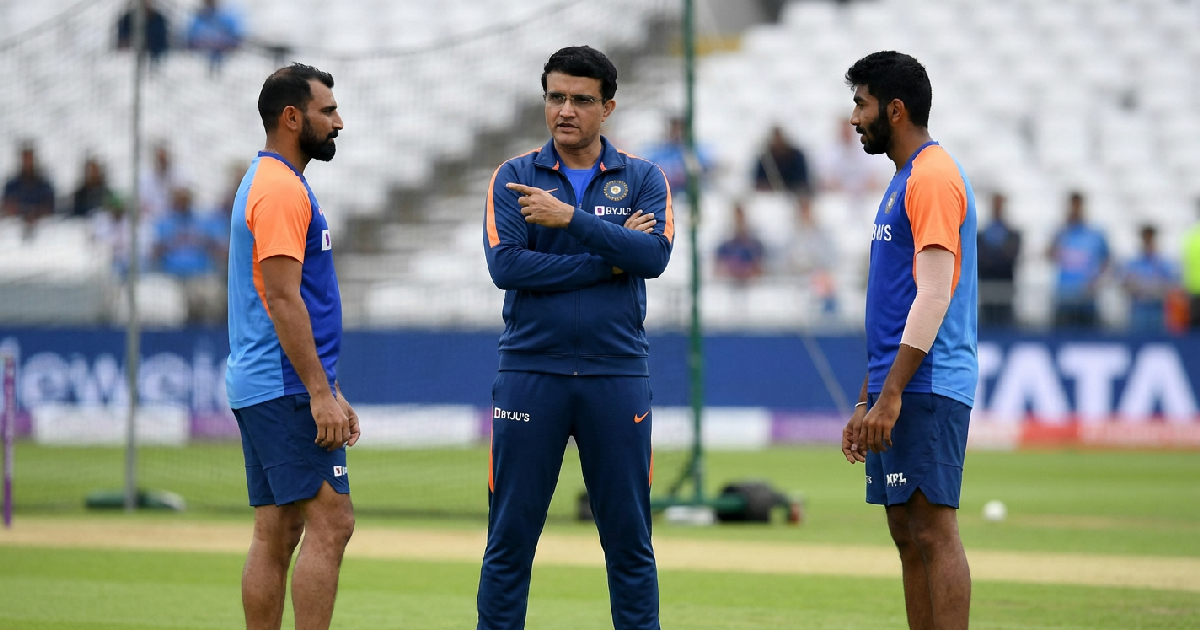
Former India captain Sourav Ganguly has stepped into the ongoing discussion regarding India’s bowling strategy, reportedly offering a firm endorsement for Mohammed Shami to be restored as Jasprit Bumrah’s primary new-ball partner. Ganguly’s observations come as the Indian cricket establishment weighs its options for upcoming international assignments, with the performance of various pacers under the spotlight in domestic and franchise-based competitions.
Shami, who has spent time away from the national setup while focusing on fitness and injury recovery, has recently been seen working his way back toward full match readiness. For Ganguly, the logic appears rooted in the veteran’s proven ability to extract movement and maintain high speeds, qualities that make him a natural choice to share the attack with Bumrah. The former BCCl president indicated that the national selection committee should prioritize proven match-winners when they are fit and available for selection.
The Case for the Bumrah-Shami Partnership
The tactical understanding between Bumrah and Shami has served as a cornerstone for some of India’s most successful periods in recent years. Reports suggest that Ganguly believes while younger bowlers have shown flashes of potential, the unique pressures of the international stage demand the kind of reliability that Shami has historically provided. Shami’s trademark upright seam and his ability to move the ball in both directions remain qualities that few others in the current pool of fringe players can replicate consistently.
This push for veteran stability comes at a time of significant competition within the Indian ranks. While the current T20 landscape has seen various bowlers rising through the ranks, including those featured in recent updates on leading wicket-takers, the search for a definitive pace partner for Bumrah remains a central theme for team management. Ganguly’s reported message is that Shami shouldn’t merely be a squad member, but the first choice to lead the attack from the other end.
And it’s not just about raw pace. Ganguly reportedly views the management of Shami’s workload as a more straightforward task than attempting to find a replacement who can match his impact during the powerplay and the high-pressure death overs. The “Dada” of Indian cricket seems to believe that experience is the most valuable currency in high-stakes tournaments.
Managing Transitions in the Indian Pace Attack
The Indian team is currently navigating a delicate transition period, attempting to integrate emerging talent without losing the edge provided by established stars. This balancing act has occasionally left the side looking for answers when lead bowlers finish their spells. The return of Shami could provide the tactical cushion that leadership figures require during major global events.
While some observers have pointed to Shami’s age and his recent time on the sidelines as potential hurdles, Ganguly has reportedly brushed aside these concerns, focusing instead on the bowler’s natural rhythm and his past ability to deliver on the biggest stages. This debate over experience versus youth is a recurring theme in Indian cricket, particularly as senior figures have noted the serious challenges posed by fluctuating form and the rapid rise of younger competitors.
Shami’s presence also has a knock-on effect for the rest of the bowling unit. A reliable pace duo at the top often allows spinners to operate with more tactical freedom in the middle overs. When the pressure from the seamers dissipates, it can often lead to a loss of control—a trend that has occasionally proved costly for India in knockout scenarios during recent international cycles.
The Selection Path Forward
As the current cricket season progresses, selectors are expected to keep a close eye on Shami’s physical condition and bowling metrics. If he demonstrates that he has reclaimed his optimal pace and rhythm, the calls to include him in the primary XI will likely intensify. The argument for a “no-nonsense” approach to selection—one that prioritizes current skill and veteran poise over long-term potential—is gaining traction among former players and analysts alike.
The global conversation around fast bowling continues to evolve, with many experts looking for the next individual to set new benchmarks for speed and accuracy. Even voices from across the border have occasionally commented on the emerging pace talent in the region, such as recent discussions surrounding speed records and the development of quicks in the subcontinent. For India, however, the answer might lie in a familiar partnership.
Whether the BCCI and the selection panel decide to act on this advice remains an open question. But as the next major trophy cycle looms, the idea of reuniting two of the world’s most disciplined fast bowlers is likely to remain a significant talking point for the Indian cricketing public.
